

Most people think a brief starts with the client, or the market, or a spark of creative vision on a blank page. In my experience, something else writes the brief first, and it writes most of it.
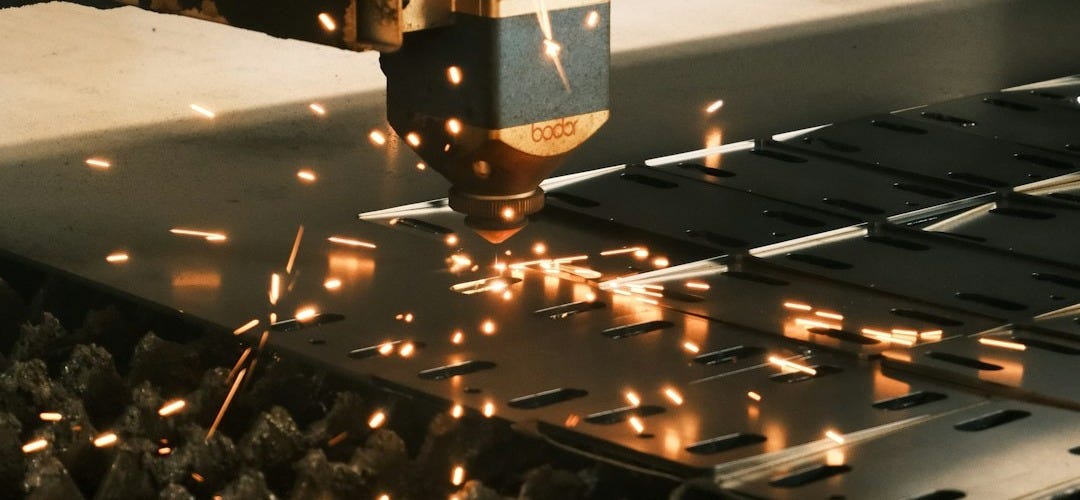
The production line. The machine, the sheet of material, the cut path, the thing the factory can and cannot do.
By the time anyone opens the strategy deck, the constraint has already decided more than the deck has. And here is the part that took me years to see. The best work does not fight that. It reads it.
The limit is not the enemy of the idea. Very often, the limit is the idea.
Each week, I unpack one real-world brand signal at a time. If you’d like the next one in your inbox, subscribe.
The cut path that became the brand
A founder once asked me to design five wall-art pieces, wood and metal. That was the whole brief. Five products. No brand, no story, just five things to cut and sell.
The material came with rules. Metal cut from a single sheet. One cut path. And a sheet of metal, once you cut a shape out of it, leaves a hole exactly the shape of what you took. Most production treats that hole as scrap. It goes in the bin.
So I asked a different question. Not "what do I want to make," but "what else can come out of the same cut?" On one piece, the empty space left behind after cutting the first shape became the raw material for the second. Nothing was thrown away. The negative was not waste. It was the next product.
That decision did not stay technical. It became the whole character of the brand. Honest material, nothing hidden under paint, nothing wasted. That is not a sustainability slogan someone bolted on in a meeting. It came straight out of the cut path. The piece went on to win a design award, and the award was really for the constraint, worn as a strategy.
More signal reads like this arrive every week.
The fire you are not allowed to turn off
We are trained to treat the manufacturing limit as the thing that ruins the vision. The budget will not stretch. The machine cannot bend that far. The tooling only allows one shape. And so the constraint feels like the place where the good idea goes to die.
I spent years around glass manufacturing. There is one fact about it that changed how I read every product category after that.
A glass furnace cannot be turned off.
Once you light it, it has to run. Day and night, without stopping. The moment you shut it down, the furnace is scrap. So the fire never rests, and the factory never stops making glass.
Now follow what that does. The furnace keeps producing. The warehouses fill with plain, blank glassware. And someone has to turn all that blank glass into something people will actually buy. So the factory prints. Pattern after pattern, millions of them a year. Not because a marketing team dreamed up millions of ideas. Because the fire would not stop.
Think about what that means. The number of designs on the shelf was not decided in a brand meeting. It was decided by a furnace that nobody is allowed to switch off. The production reality wrote the brief, and the brief said one thing: never stop making new patterns.
That is the same move as the wall art, seen from the other side. One brand found its character in what the cut path left behind. The other was handed its whole output by a fire it could not control. In both, the job was the same. Hear what the production reality is saying, and turn it into a meaning the market will pay for. That translation, from what the factory can do to what the object comes to mean, is most of the job, and almost nobody names it out loud.
What your constraint is trying to become
So before you write a brief, or accept one, do one thing first. Look hard at what your production can already do, and at the limit you keep apologising for.
The single color your process forces on you. The offcut you keep throwing away. The one shape the tooling makes cheaply. You have probably been treating these as problems to design around. They may be the most distinctive thing you own, sitting in plain sight, waiting for someone to read them as a signal instead of a setback.
The question is not "how do we get around this limit." It is "what does this limit want to become?" A rival can copy your slogan in an afternoon. They cannot easily copy a meaning that grew out of your own production floor, because it is welded to how you actually make the thing.
And if a limitation ever turned into the best part of your product, the thing customers ended up loving most, reply and tell me what it was. I read every one.